
MILTON — Santa Rosa County is taking additional steps to boost surveillance and public awareness about the Zika virus.
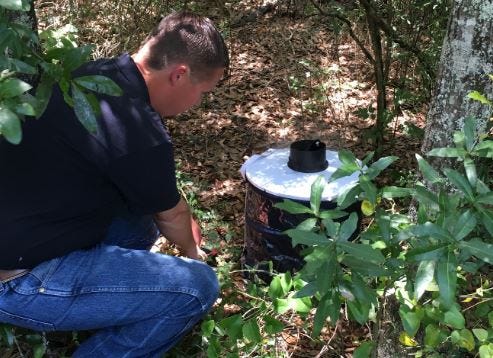
County mosquito control technicians just added two BG-Sentinel mosquito traps to their surveillance network, and additional traps are on back-order.
The new traps — especially attractive for Aedes aegypti, the Asian tiger mosquito and Aedes albopictus, the southern house mosquito — will be monitored to determine the number and species of mosquitoes in the county.
Dr. John Smith, an entomologist with Florida State University, analyzes the data to enable the county's Mosquito Control Department to optimize and target operations. Thirty spray routes cover Santa Rosa County, and spray schedules are posted at www.santarosa.fl.gov/mosquito.
Additionally, the county has submitted a request to the state for funds to cover increased operating costs and promote public awareness of personal responsibility for mosquito control at home. A social media campaign has been launched to provide residents with tips to reduce mosquito breeding sites and prevent bites.
Residents can help reduce the mosquito population by draining flower pots, watering cans, food bowls, and any container that holds water. Moist organic matter provides a perfect environment for mosquito larvae. By cleaning gutters and raking leaves, homeowners can stop the growth cycle.
"Everyone in Santa Rosa County can and should do their part to reduce mosquitoes. The particular species that carry Zika virus are container breeders. They love the saucers under your flower pots and can lay hundreds of eggs in something as small as a bottle cap," said Keith Hussey, mosquito control director. "These mosquitoes don't swarm from the swamps to hunt you down — they are already on your front porch. They're your mosquitoes."
Residents may schedule a site inspection or report areas of standing water, such as neglected or abandoned swimming pools, by calling the Environmental Department at 981-7135.
This article originally appeared on Santa Rosa Press Gazette: Santa Rosa County adds new traps, public awareness campaign to mosquito abatement