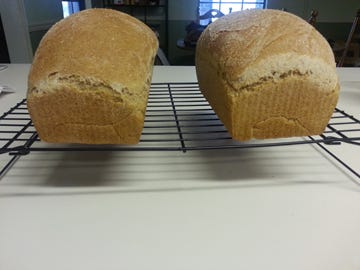

THE ART OF BREAD MAKING is something
that’s almost gone by the wayside. It’s very easy to
just pick up a loaf at the local grocery instead of
dissolving yeast and waiting for the bread to rise.
However, some bakers take the art of bread making
to it’s fullest by grinding their own wheat, while some
are completely content with purchasing a bread
baking machine and pouring in the ingredients and
pressing start.
Sarah Jones, owner/operator of Bread of Life
Bakery in Pensacola said her family began their
quest of teaching the art of bread baking in 1995.
Jones said her parents started an organization called
EduCare, teaching classes for eager bakers about the
art of grinding wheat, dissolving yeast, kneading
and sculpting loaves and other baked items. Jones
said they printed recipe books and instruction
manuals about how to use freshly ground wheat
instead of bleached, processed fl our. She said their
family opened the bakery in 1999.
Jones said the bakery can order 6 gallon buckets
of wheat for their customers to grind and also can
order wheat mills to process the grains. Th ere are
diff erent types of wheat to consider for baking: hard
red winter, hard red spring, soft red winter, durum,
hard white and soft while. According to EduCare
instruction manuals, red is a heartier, nuttier fl avor
and soft white is for pastries. Soft wheat is the lowest
in protein and red wheat is best used for yeast rising
breads and rolls.
Today’s serious baker has variety of mixers to
choose from when creating whole wheat breads
from scratch, said Jones, although some may want
to knead their dough completely by hand. EduCare
manuals describe hand kneading by learned
experience. It’s typically a ten minute process but
can take longer if the baker is new to the process.
This article originally appeared on Santa Rosa Press Gazette: The art of bread making